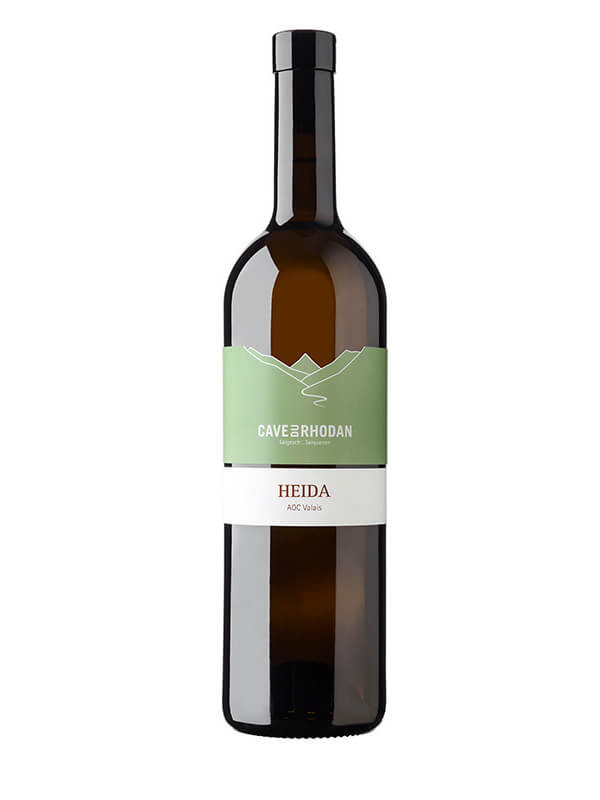
Where is Heida from?
The history of Heida dates back several centuries. This grape variety was already being cultivated in Valais as far back as the Middle Ages. Today, Heida is particularly well known for the vineyards around Visperterminen in Upper Valais.
With elevations of up to about 1,150 meters above sea level, the vineyards there are among the highest in Europe.
The combination of:
- intense sunlight
- dry Alpine air
- steep terraced slopes
- large temperature differences
creates ideal conditions for white wines full of character, with freshness and intensity.
Traditional dry-stone walls and meticulous craftsmanship continue to define Valais mountain viticulture to this day. It is precisely this Alpine heritage that gives Heida its distinctive style.
Cave du Rhodan consciously embraces this terroir-driven Valais identity and combines its heritage with modern winemaking techniques.
“The high-altitude vineyards of the AOC Valais play a decisive role in shaping the Heida’s minerality and freshness.” — Olivier Mounir, Cave du Rhodan
Heida, Païen, or Savagnin Blanc—what's the difference?
Heida, Païen, and Savagnin Blanc all refer to the same grape variety. The different names vary by region.
Heida: Upper Valais
Païen: Lower Valais
Savagnin Blanc: Jura / International
Traminer: Historical Connection
In Valais in particular, this grape variety has developed its own distinct wine identity. While Savagnin Blanc is used in the French Jura to produce Vin Jaune, among other wines, Heida is now primarily associated with mineral-driven, full-bodied Valais white wines.
Why is Heida considered a distinctive Valais grape variety?
Heida is distinctly different from many international white wines. This grape variety combines power, structure, and freshness with its Alpine origins and remarkable aging potential.
Many Heida wines demonstrate:
- exotic fruit
- nutty notes
- mineral tension
- strong body
- long persistence
Unlike many modern white wines, Heida often has more depth and structure. At the same time, the high altitude preserves its precise acidity and freshness.
The combination of:
- small yields
- Mountain Viticulture
- mineral soils
- intense sunlight
makes Heida one of Switzerland's most distinctive white wine specialties.
What does Heida taste like?
Heida has a complex flavor profile and combines exotic fruit with mineral freshness and structured body.
Typical flavors:
- Mango
- Pineapple
- Citrus fruits
- Honey
- Hazelnut
- floral notes
- Herb Seasoning
On the palate, Heida often:
- full-bodied
- lively
- harmonious
- mineral-like
- long-lasting
Depending on the aging process, additional smoky or slightly salty notes may also emerge. Aged Heida wines often develop complex honey and nutty aromas.
The combination of freshness and body makes Heida an appealing choice both as a meal accompaniment and as a sophisticated white wine.
What role does elevation play in the Valais?
Altitude is one of the most important factors determining the quality of Heida. The high-altitude vineyards of the AOC Valais allow the grapes to ripen slowly, developing intense aromas.
During the day, the intense sunlight ensures optimal ripening, while the cool nights preserve the wine's freshness and acidity.
These conditions promote:
- aromatic concentration
- mineral precision
- live acid
- long shelf life
The steep terraced slopes around Visperterminen, in particular, are considered to be a defining feature of the Valais Heida style.
Why is Heida often more expensive?
High-quality Heida is produced under challenging conditions. Many vineyards are located on extremely steep slopes and can only be cultivated with a great deal of manual labor.
In addition:
- small returns
- limited production volumes
- Mountain Viticulture
- Time-consuming patio maintenance
- Slow aging at high altitudes
These factors significantly increase production costs, but at the same time result in wines that are concentrated and full of character.
For many wine lovers, that is precisely what makes Heida so special: authentic Alpine viticulture with a clear provenance and high quality.
What dishes does Heida go well with?
Heida is considered a versatile accompaniment to meals and pairs particularly well with hearty Swiss dishes.
Perfect with:
- Raclette
- Fondue
- Alpine cheese
- Dried meat
- Smoked salmon
- Trout
- Crustaceans
- Poultry
The combination of a full-bodied profile and lively acidity makes Heida particularly versatile in the restaurant industry.
A high-quality Heida from Cave du Rhodan is ideal both as an aperitif and as a pairing for Alpine cuisine.
How can you tell if Heida is high-quality?
Not every Heida has the same quality or style. Particularly high-quality wines can be recognized by their origin, structure, and precision.
Key Quality Features:
- AOC Valais
- mineral character
- balanced acidity
- long finish
- precise aromas
- Originating from high-altitude regions
Aging also plays an important role. High-quality Heida never tastes arbitrarily fruity, but instead displays structure, terroir, and depth.
Cave du Rhodan focuses on terroir-driven winemaking to clearly highlight the distinctive characteristics of the Valais Alps.
Heida vs. Chardonnay—what's the difference?
Many wine lovers compare Heida to well-known international white wines such as Chardonnay. Both grape varieties have body and aging potential, but differ significantly in style.